Supporting a Foster's Child's Education
A Guide for Foster Parents
Supporting a child’s education is an important part of being a foster parent. Children in foster care may experience school changes, interrupted learning, trauma, and other challenges that can affect their educational journey. As a foster parent, you can provide the stability, encouragement, and advocacy they need to feel supported at school and reach their potential.
You do not have to be an educator or have all the answers. By building a strong relationship with your child’s school, establishing consistent routines at home, and learning how to advocate for their educational needs, you can make a meaningful difference.
This guide explores what foster parents should know about education for children in foster care, including school stability, educational advocacy, IEPs and 504 plans, homework support, extracurricular activities, and planning for life after high school.

Understanding Education for Children in Foster Care
Children in foster care can have educational experiences that look very different from those of their peers. A child may have changed schools because of a change in placement, missed school because of circumstances outside their control, or struggled to keep up academically during periods of uncertainty.
These experiences do not reflect a child’s intelligence, ability, or potential.
As a foster parent, one of the most valuable things you can provide is consistency. A stable home, predictable routines, and a caring adult who advocates for the child can help create a stronger foundation for learning.
How Trauma Can Affect a Child’s Education
Children entering foster care may have experienced abuse, neglect, family separation, frequent moves, or other traumatic experiences. These experiences can affect how a child feels, behaves, interacts with others, and approaches school.
For example, a child may:
- Have difficulty concentrating or completing assignments
- Struggle to trust teachers or other adults
- Become frustrated or overwhelmed easily
- Fall behind academically
- Have difficulty forming friendships
- Withdraw from classroom activities
- Act out or display challenging behaviors
- Feel anxious about making mistakes or failing
It is important to remember that challenging behavior is often a form of communication. Instead of viewing a child’s struggles as a lack of motivation, consider what they may be trying to communicate about their needs.
A trauma-informed approach focuses on safety, relationships, consistency, and understanding. Working with the child’s teachers, school counselors, caseworker, and other professionals can help ensure that the child receives appropriate support.
At Bair, education is part of the bigger picture.
Children in foster care don’t leave their experiences at the front door when they walk into a classroom. It’s why Bair’s foster parent training and ongoing support look at the whole child, including emotional, behavioral and educational and relational needs.
Prioritizing School Stability
School stability can play a significant role in a child’s educational success.
School stability can help children in foster care maintain relationships, routines, and academic progress during a time when many other parts of their lives may be changing. Whenever it is safe and appropriate, remaining in the same school can give a child an important sense of consistency while other parts of their life may be changing. Staying connected to familiar teachers, friends, routines, and school activities can make transitions in foster care easier.
If a school change is necessary, work with the child’s caseworker and both schools to make the transition as smooth as possible.
You can help by:
- Making sure school records are transferred promptly
- Learning about the child’s current academic progress
- Sharing relevant information with the new school
- Helping the child meet teachers and support staff
- Asking about transportation and enrollment requirements
- Making sure completed coursework and credits are properly documented
- Helping the child maintain important relationships when possible
A school transition can be overwhelming for a child. Your involvement can help them feel prepared and supported rather than as though they have to start over alone.

Be an Advocate for Your Foster Child’s Education
One of the most important roles you can have as a foster parent is being an educational advocate.
You know your foster child in ways their teachers may not. You see their strengths, interests, frustrations, and progress at home. Sharing appropriate information with school staff can help create a more complete picture of what the child needs to succeed.
Start by developing a positive relationship with the child’s teachers, counselors, administrators, and other school professionals.
Ask questions such as:
- How is my foster child doing academically?
- Are they completing their assignments?
- Are they participating in class?
- How are they interacting with other students?
- Are there subjects where they need additional support?
- Are there behavioral or emotional concerns?
- What resources are available to help?
You do not have to wait for a problem to become serious before communicating with the school. Regular communication can help identify concerns early and allow the adults supporting the child to work together.
Understanding IEPs and 504 Plans
Some children in foster care may need additional educational services or accommodations. If you believe your foster child is struggling in school, talk with their teacher or school administrator about what support may be available.
Two important tools you may hear about are an Individualized Education Program (IEP) and a 504 Plan.
IEP’s Explained
An Individualized Education Program, or IEP, is designed for students who qualify for special education services under the Individuals with Disabilities Education Act (IDEA).
An IEP may include:
- Specialized instruction
- Individualized educational goals
- Related services
- Classroom accommodations
- Progress monitoring
- Other supports based on the student’s individual needs
If your foster child may need special education services, you can ask the school about the evaluation process.
504 Plan’s Explained
A 504 Plan provides accommodations to help a student with a disability access and participate in their education.
Accommodations may include:
- Extended time on tests
- Preferential seating
- Changes to how assignments are presented
- Additional breaks
- Other supports based on the student’s needs
An IEP and a 504 Plan are not the same thing, so it is important to work with the school to understand which type of support may be appropriate.
If your foster child is being evaluated for educational services, participate in the process and share what you know about the child’s strengths, needs, and experiences.
Build a Strong Partnership With Your Foster Child’s School
Teachers, counselors, school administrators, caseworkers, foster parents, and other professionals may all play a role in helping a child succeed. When these adults communicate and work toward the same goals, the child benefits.
You can strengthen the relationship between your home and the school by:
- Attending parent-teacher conferences when possible
- Responding to teacher communication
- Sharing relevant changes that may affect your child at school
- Asking about academic and behavioral progress
- Celebrating your child’s accomplishments
- Reaching out when you have concerns
- Learning who the school foster care liaison or point of contact is
School counselors can also be valuable resources. They may help with academic planning, social and emotional concerns, peer relationships, and connecting students with additional services.
Most importantly, let your foster child know that the adults around them are working together to support them.
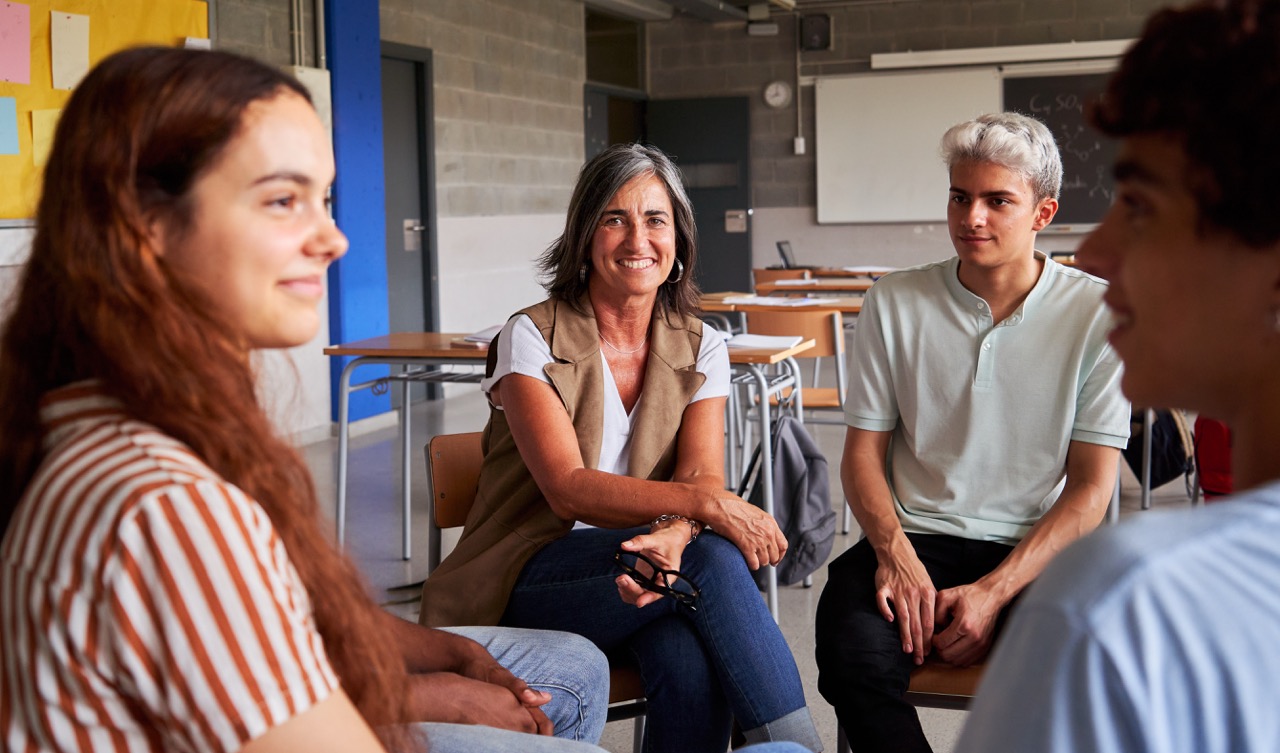
Create a Supportive Learning Environment at Home
You do not need to be a teacher to support your foster child’s education.
A consistent and encouraging environment at home can make homework and studying feel more manageable. Establish routines that give your child a predictable time and place for schoolwork.
A supportive learning environment might include:
- A regular homework schedule
- A quiet place to work
- Limited distractions
- Access to school supplies
- Time for reading
- Encouragement and positive feedback
- Breaks when a child becomes overwhelmed
Consistency is often more important than having a perfect study space. A kitchen table, desk, or other quiet area can work well when it gives the child a reliable place to focus. Large assignments can feel overwhelming, especially for a child who is already experiencing stress. Breaking schoolwork into smaller tasks can make it easier to get started.
Remember to recognize effort, persistence, and progress, not just grades. Encouragement can help a child develop confidence and understand that struggling with something does not mean they cannot succeed.
Support Learning Beyond the Classroom
Education does not stop when the school day ends. Sports, music, art, clubs, libraries, and community activities can help children to explore their interests, build confidence and develop relationships.
Ask your child’s school about free or low-cost tutoring and enrichment programs. Community organizations may also offer activities and resources for children and families.
At home, simple activities can encourage a love of learning:
- Read together
- Visit the library
- Try age-appropriate science experiments
- Encourage creative activities such as art or music
These experiences can help children discover their strengths and develop interests that extend beyond the classroom.
Addressing Missed Credits and School Transitions
Older youth in foster care may face additional educational challenges when they have changed schools multiple times.
For example, a student may have completed part of a semester at one school before moving to another. If academic records or coursework are not transferred properly, the student may have difficulty receiving credit for work they have already completed.
When a school transition occurs, ask for copies of important educational records, including:
- Report cards
- Transcripts
- Attendance records
- Current coursework
- Individual education plans, when applicable
- Samples of completed work
- Information about credits earned
Work with the child’s caseworker and school staff to ensure that completed coursework is properly documented and that the child receives appropriate credit whenever possible.
The goal is to prevent a child from falling further behind because of circumstances beyond their control.
Supporting Emotional and Behavioral Needs at School
Academic success is closely connected to a child’s emotional well-being.
If your foster child is struggling with anxiety, frustration, social relationships, or behavior at school, communicate with their school counselor, social worker, teacher, or other appropriate support professional.
Ask what resources are available and whether the school uses trauma-informed practices.
A supportive school environment can help children feel safe enough to learn, build relationships, and develop new skills. When a child is struggling, responding with patience and understanding can be more productive than focusing only on consequences.
At home, encourage your foster child to talk about their experiences. Let them know that asking for help is a strength and that they do not have to handle difficult situations alone.
Planning for Life After High School
Supporting education also means helping young people think about what comes next.
As your foster child approaches high school graduation, begin conversations about their goals and interests. Some young people may want to attend a four-year college, while others may be interested in community college, vocational training, apprenticeships, military service, or entering the workforce.
There is no single right path.
College and Higher Education
For foster youth interested in college, community colleges, trade schools, vocational programs, and other career-training opportunities can provide accessible pathways to education and employment.
Depending on the student’s interests, these programs may offer training in areas such as healthcare, technology, skilled trades, business, and other career fields.
Talk with your foster child about their interests and strengths, then help them explore options that align with their goals.
How Foster Parents Can Make a Difference
Supporting a child’s education is about more than homework and report cards.
It is about helping a child believe that their future matters.
You can make a difference by showing up for school events, celebrating accomplishments, advocating when something is not working, creating stability at home, and reminding your foster child that they are capable of learning and growing.
You will not always know the answer or immediately know what resource to use. That is okay. Reach out to the child’s school, caseworker, and support team when you need guidance.

Foster Parents Have Bair’s Support
At The Bair Foundation, we understand that becoming a foster parent means taking on many new responsibilities, including helping children navigate school, relationships, and everyday life.
Bair foster parents receive training and ongoing support as they learn how to meet the individual needs of the children in their care.
If you are considering becoming a foster parent, you can learn more about foster care with The Bair Foundation and take the next step toward providing a safe, supportive home for a child in your community.
Frequently Asked Questions About Education for Children in Foster Care
Can foster parents help with their foster child’s education?
Yes. Foster parents can support education by creating consistent routines at home, communicating with teachers, attending school meetings, encouraging learning, and advocating for the child’s educational needs.
Can a child in foster care stay in the same school?
When it is safe and in the child’s best interest, maintaining school stability may be possible. Foster parents should work with the child’s caseworker and school professionals to understand the options available.
What should I do if my foster child is struggling in school?
Start by talking with the child’s teacher or school counselor. Ask about the specific challenges they are seeing and what interventions or resources may be available. If concerns continue, ask whether an educational evaluation or additional support may be appropriate.
What is the difference between an IEP and a 504 Plan?
An IEP provides specialized education and related services for eligible students with disabilities. A 504 Plan generally provides accommodations that help an eligible student access their education. The school can help determine what type of support may be appropriate.
How can I help my foster child with homework?
Create a consistent homework routine and provide a quiet place to work. Encourage your child to solve problems independently, break large assignments into smaller tasks, and praise effort and persistence.
How can I support my foster child’s future after high school?
Talk with your foster child about their interests and goals. Help them explore college, community college, vocational training, apprenticeships, employment, and other opportunities. School counselors and other professionals can also help identify financial aid and support programs.
Supporting a Foster Child’s Education
Supporting education isn’t just about grades or homework. It can mean helping a child feel safe enough to learn, advocating when something isn’t working, celebrating progress and helping them see possibilities for their future.
At The Bair Foundation, foster parents receive training, guidance and ongoing support as they help children navigate school, relationships and life in a new home. You do not have to navigate the foster care journey alone. With the right support and resources from Bair, you can help a child feel confident in the classroom and hopeful about what comes next.
Become a Foster Parent with The Bair Foundation
Interested in becoming a foster parent with The Bair Foundation? Learn more about foster care and how you can make a difference in a child’s life by filling out our contact form here
Children who enter the foster care system are far less likely to graduate from high school or attend college.
Working with us, you can provide the stability, permanency and direction foster children are desperately yearning for.
Become a Foster parent